typical output: selectable, searchable text with embedded fonts
Book quality at API speed
Every document is typeset like a printed book and comes back in one call, the first one and the ten-thousandth.
Quality. What you wrote is what prints. Tables keep their alignment and repeat their headers on every page. Code never spills off the edge. Paragraphs break where a book would break them: no loose lines, no orphans.
Speed. There is no browser to boot, crash, or feed gigabytes of memory. Each document is one call: Markdown in, the finished PDF out.
Reliability. The same call for one document or a whole batch sent from your scripts. Built to be automated, not watched.
What the engine does
Book-grade line breaking
Paragraphs set the way books are made (even spacing, clean rag, no loose lines), not the way browsers wrap.
Real typography
Kerning, ligatures, embedded and subset fonts. Text you can select, search, and copy.
Diagrams & math
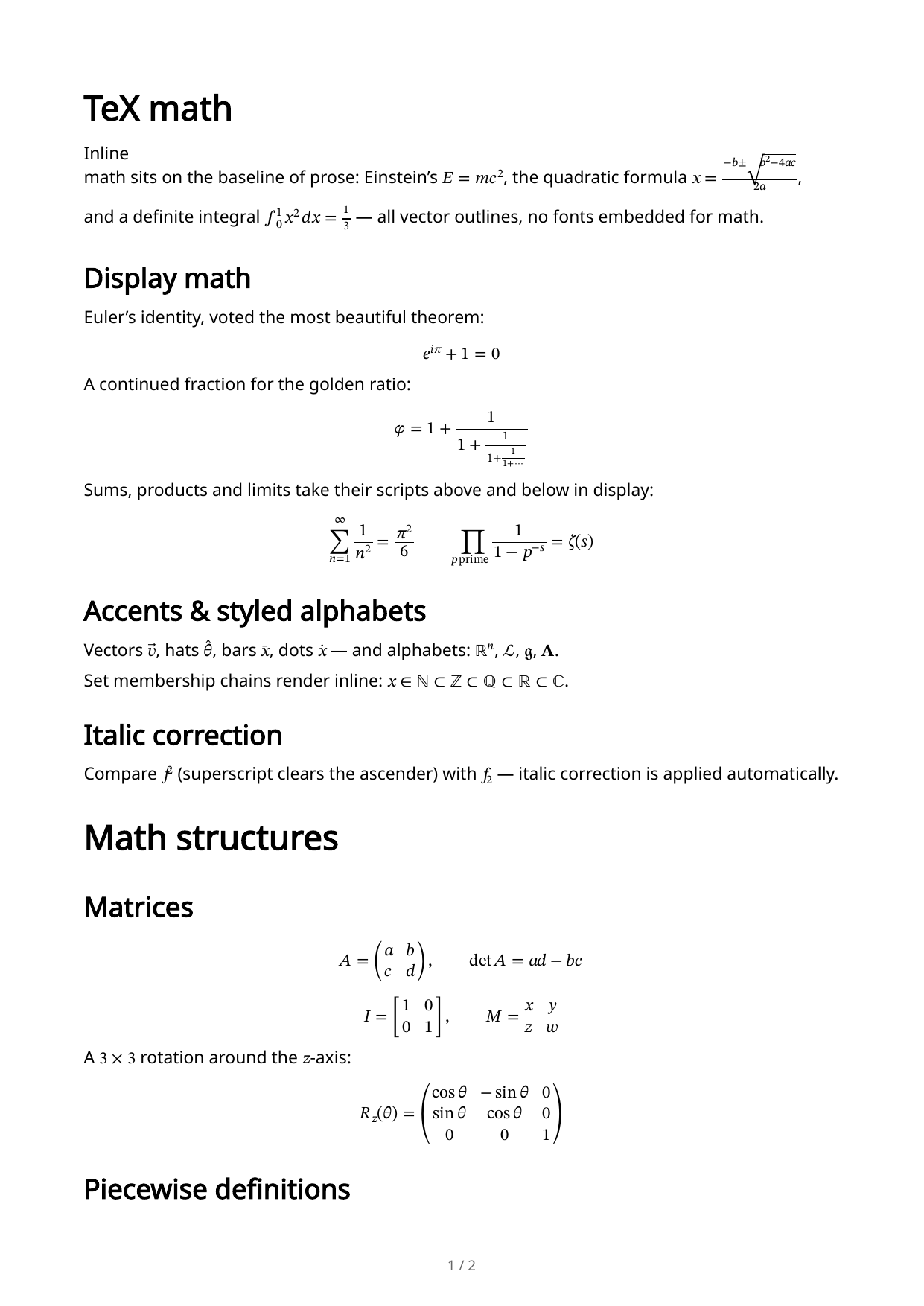
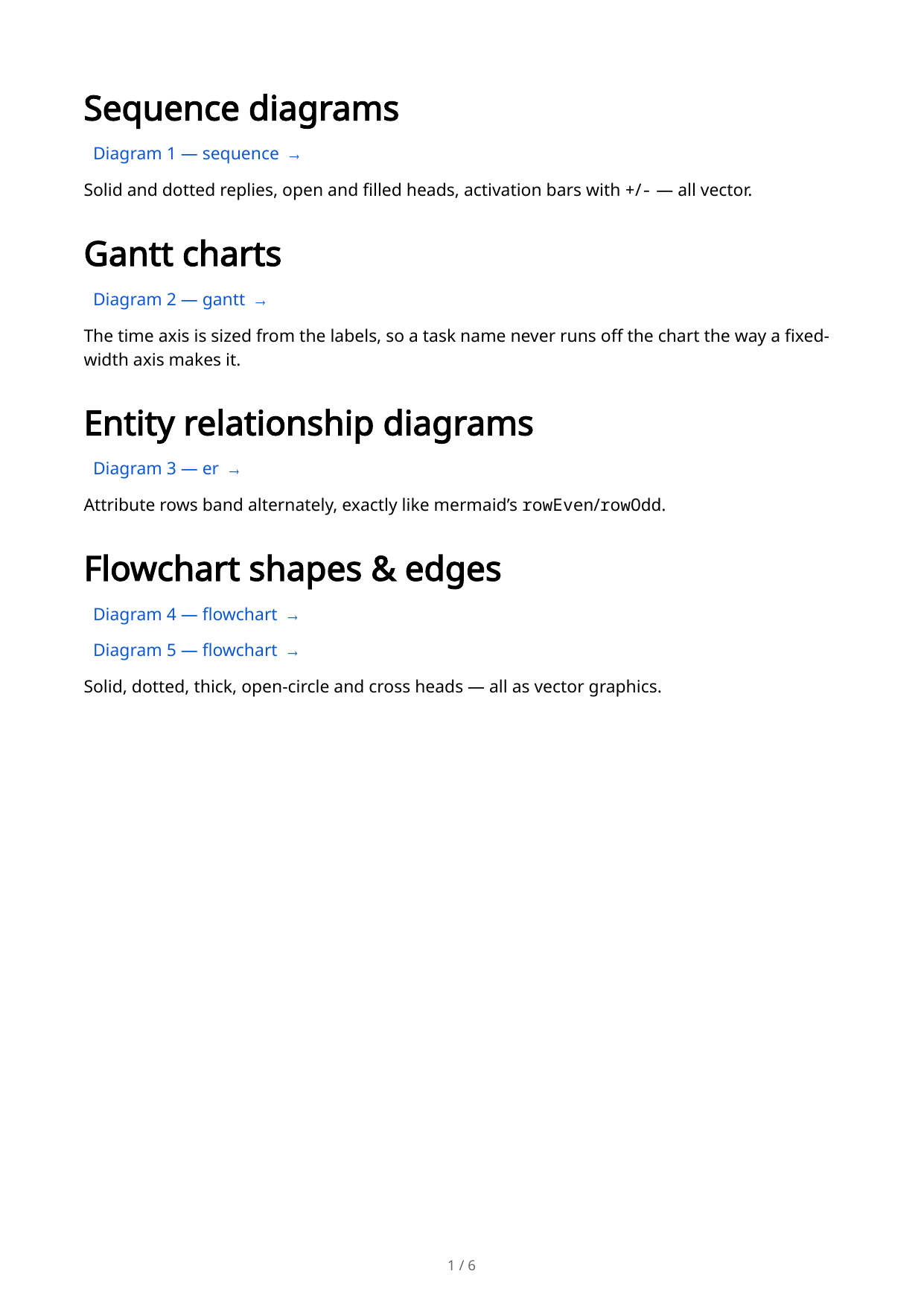
Mermaid charts and TeX math rendered as crisp vectors on the page, not screenshots. Large diagrams get their own perfectly sized page, cross-linked from the text.
Documents, not pictures
A clickable table of contents with page numbers. Bookmarks in the sidebar. Internal links that jump. Task lists that become real, clickable checkboxes.
The Markdown you write
CommonMark and the GitHub extensions: tables, footnotes, definition lists, alerts, syntax-highlighted code in fourteen languages, color emoji. Front matter becomes document metadata.
Private by design
Your document and its PDF are gone from our server the moment the PDF is delivered. Images inside the document always render; images linked from the web load for signed-in accounts and are never stored.
Sample documents
Set from plain Markdown. Exactly as the engine returned them.
Engineering report
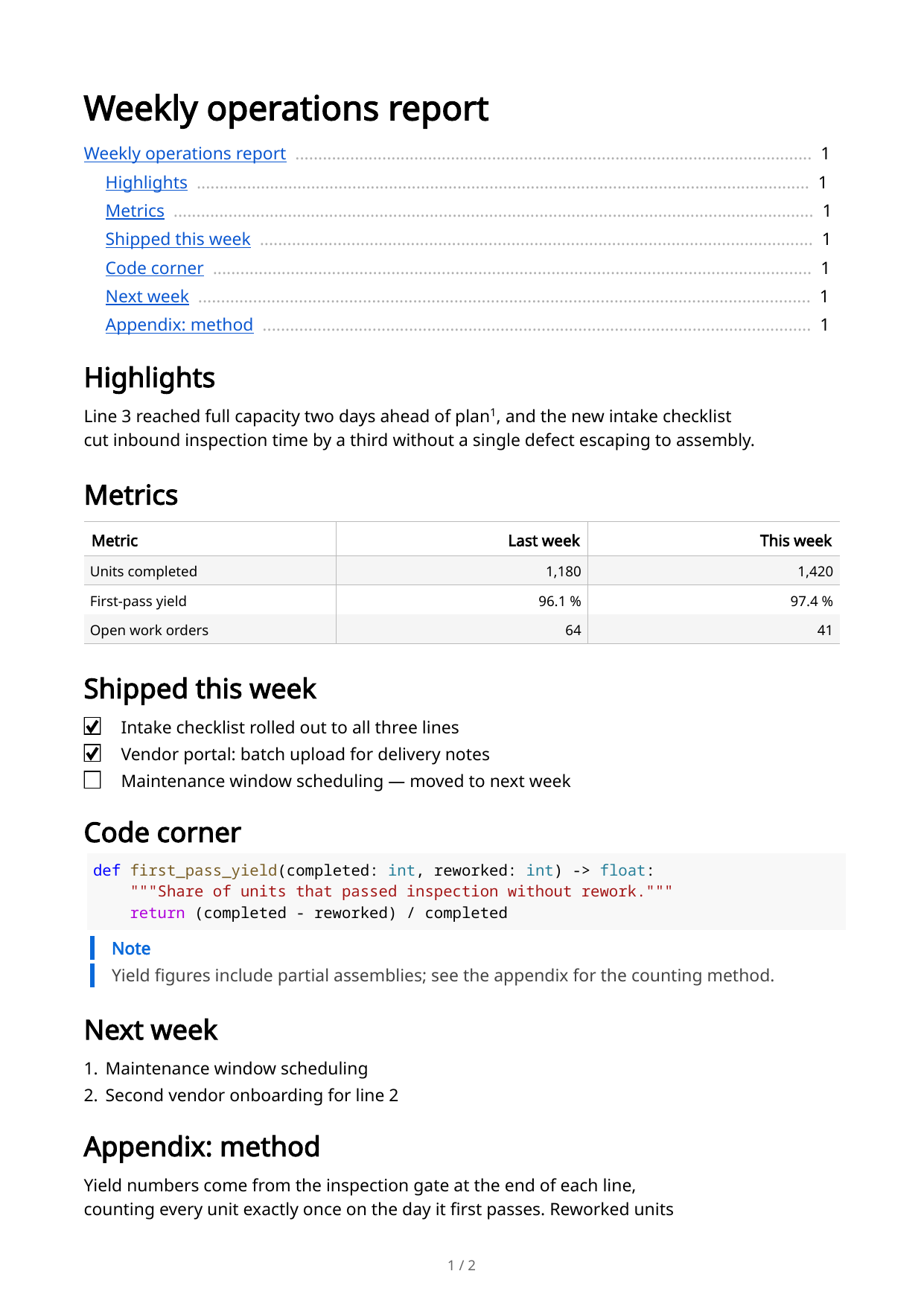
A realistic multi-page report: metadata, table of contents, metrics tables, task lists, code, footnotes.
CommonMark plus the GitHub extensions (tables, task lists, footnotes, definition lists, alerts, strikethrough) and beyond: a [TOC] that renders with real page numbers, YAML front matter that becomes PDF metadata, highlighted code in fourteen languages, color emoji.
Do Mermaid diagrams and TeX math really render?
Yes, as vectors, not embedded screenshots. Thirty-two Mermaid diagram kinds are drawn exactly as Mermaid lays them out; each large diagram gets its own page, sized to the diagram, linked from the text. TeX math is set as vector outlines, inline and display.
How is this different from the usual converters?
Most tools print a webpage to PDF. That is why the output has uneven spacing, tables sliced mid-row, code running off the page. legivel is a typesetting engine: it breaks paragraphs the way books are set, repeats table headers across pages, and keeps widows and orphans off your documents.
Can I automate it?
That is the point. A REST API for every document, and an MCP server so AI agents can produce finished documents. Everything scriptable, nothing to install.
What happens with my images?
Images embedded in the document always render. Images linked from the web are loaded too, for signed-in accounts, over a secure connection, each time you convert. We keep nothing: the images, your document and the finished PDF leave our server the moment the PDF is delivered.
When does it launch?
It is in private beta. Request access above; beta users shape what launch looks like.